

There is a familiar refrain, often repeated with quiet urgency: see the world before you leave it. Visit the state parks. Stand in the presence of Galápagos Islands. Live, fully and without hesitation. Advice like this rarely disappoints—and in this case, it proved profoundly true. Our journey to the Galápagos left us not with a sense of completion, but with a lingering, almost immediate longing to return.
Our story begins, as many such journeys do, with a long and weary passage to Quito.
First Stop: Quito, Ecuador
Reaching the Galápagos requires first arriving on the mainland—either through Guayaquil or, in our case, Quito. The journey itself offered little in the way of comfort; sleep and sustenance were fleeting companions. Still, it unfolded without incident, if not without fatigue, as we stumbled forward on bloodshot eyes and quiet determination.
By the time we arrived in Quito, the simple priorities of the moment became clear: find a taxi, find food, and find rest—however brief.
The taxi ride through the city was surprisingly seamless. The roads stretched open and uncluttered, the drivers attentive and precise, lending an unexpected ease to our passage through unfamiliar streets. Yet our efforts to secure a proper meal were thwarted by the hour; every restaurant we inquired about had already shuttered for the night.
In the end, we fell back on a universal language—“sandwiches.” A gas station seemed our last hope. But even here, fortune played its quiet trick: the sandwiches were gone. Instead, we settled for a sealed, unassuming pastry—a doughy pouch of uncertain origin.
What began as reluctant compromise quickly transformed into delight. The pastry revealed itself as something extraordinary: light, warm, and filled with a subtly sweet, almost ethereal richness. Only later did we learn its name—an empanada de viento, a “wind empanada”—a fitting title for something so unexpectedly airy and indulgent.
Puembo, Ecuador
We arrived late in Puembo, a quiet barrio on the outskirts of Quito. The streets were nearly empty, save for the occasional stray dog and small clusters of people gathered beneath scattered streetlights, their conversations drifting softly into the night. Graffiti marked the walls—familiar signs that, in another context, might have suggested unease.
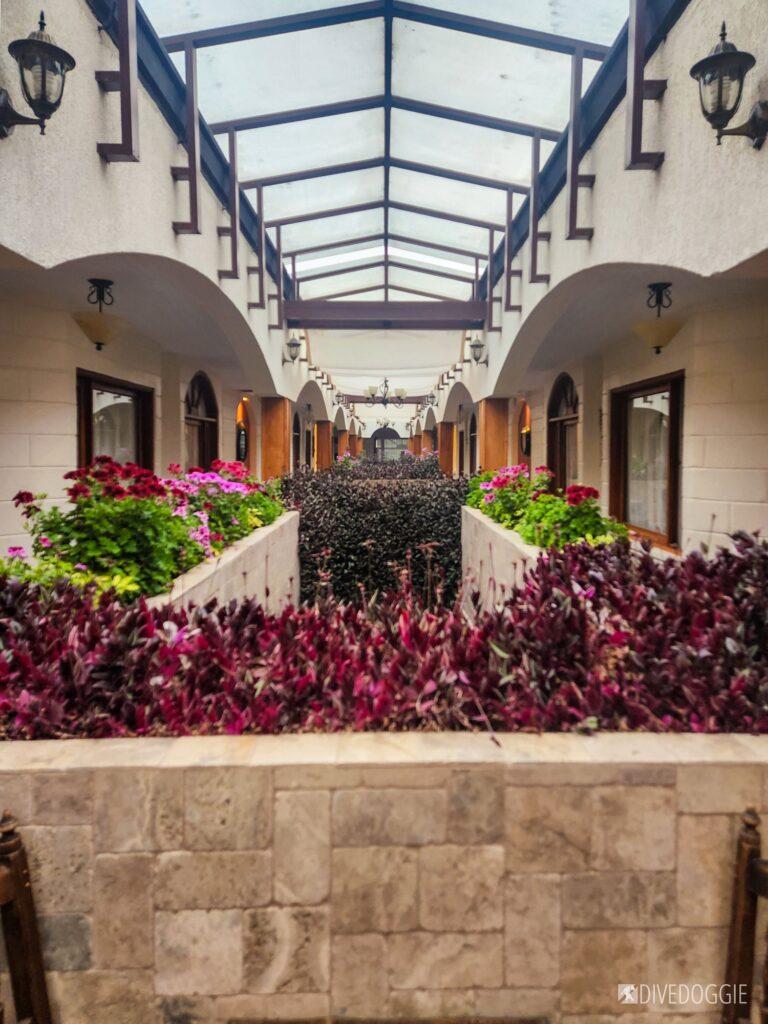
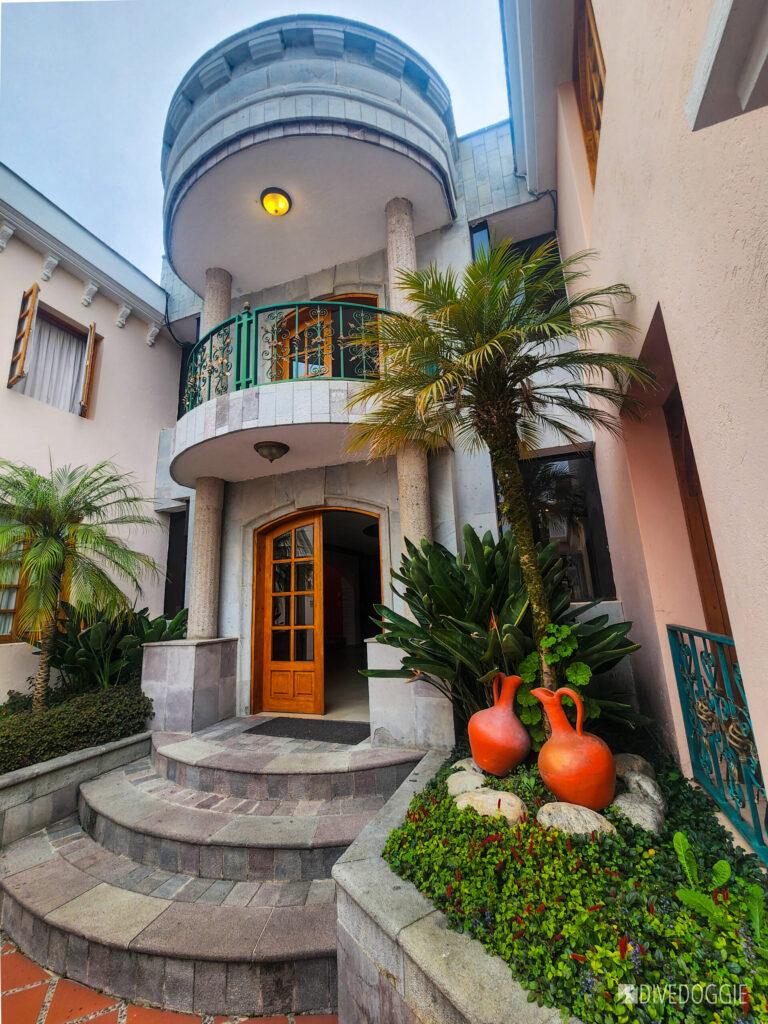
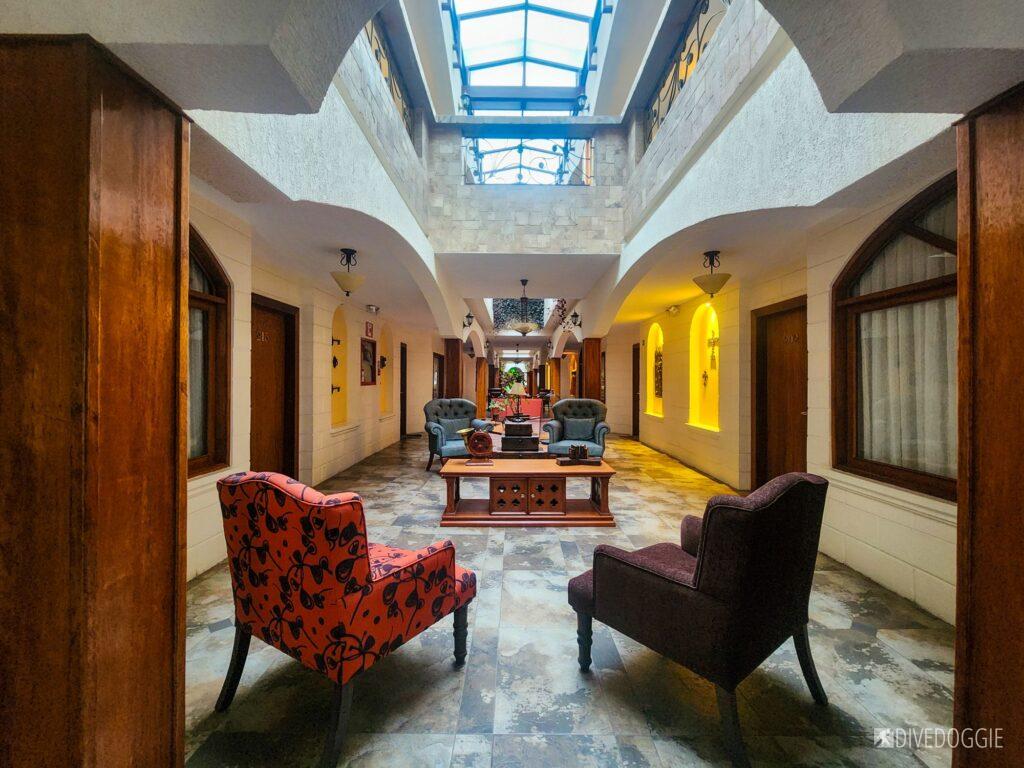
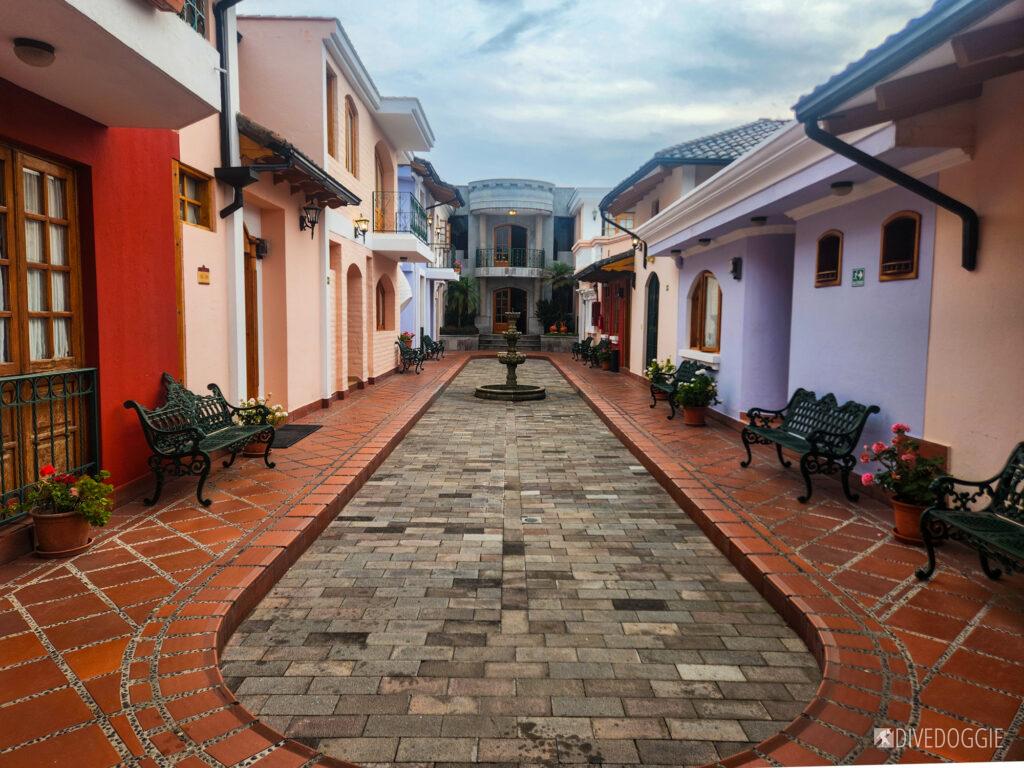
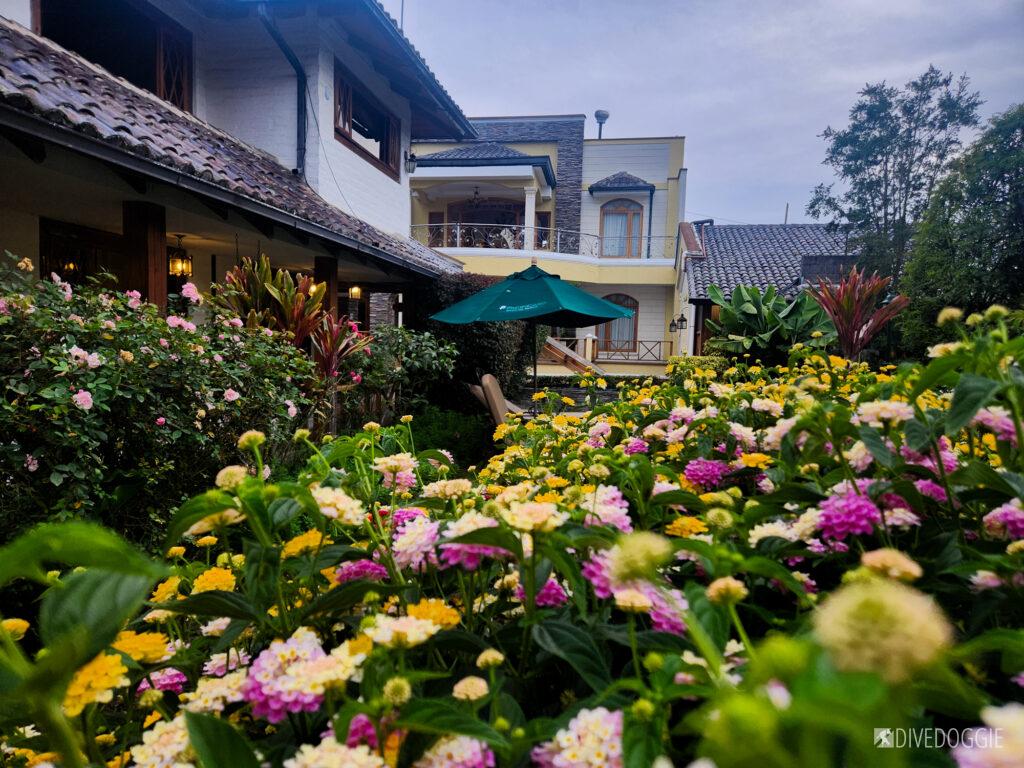
And yet, beyond the gates and concrete facades, there was something entirely different waiting. Behind those barriers lay a hidden tranquility—a place that hinted at beauty not yet revealed, one that would have to wait for morning light to fully emerge.
We were welcomed by a local host, who offered us our first taste of canelazo, Ecuador’s traditional cinnamon-infused drink, often warmed and comforting. We soon learned that its flavor shifts subtly from region to region, and that sharing these variations is a quiet point of cultural pride among locals.
Even the simplest interactions carried their own small challenges. A brief exchange with the night guard about a broken light switch—our halting explanation of “luz switch es roto”—was met with patient kindness. He demonstrated that the lights were controlled by a card-based system, an understated but thoughtful ecological feature. It was a gentle reminder of how much can be lost—and found—in translation.
At last, after a long-overdue shower, we surrendered to sleep, though only for a few fleeting hours.
Morning Light in Quito
At dawn, we prepared for the next leg of the journey, carefully repacking our bags to meet the strict requirements for our flight to Baltra. But it was the moment we opened the door that remains most vivid.
Before us unfolded a scene of unexpected splendor. The quiet edges of Quito revealed themselves in full: mountains rising in layered silhouettes, birds filling the air with bright, insistent song, and a stillness that felt both ancient and alive.
It was, in that instant, impossible not to feel a trace of regret—that we had not known, had not planned, had not allowed ourselves more time in this place.
And so, even before reaching the Galápagos, the journey had already begun to teach its lesson: that the world is generous with wonder—but only to those willing to linger long enough to notice.
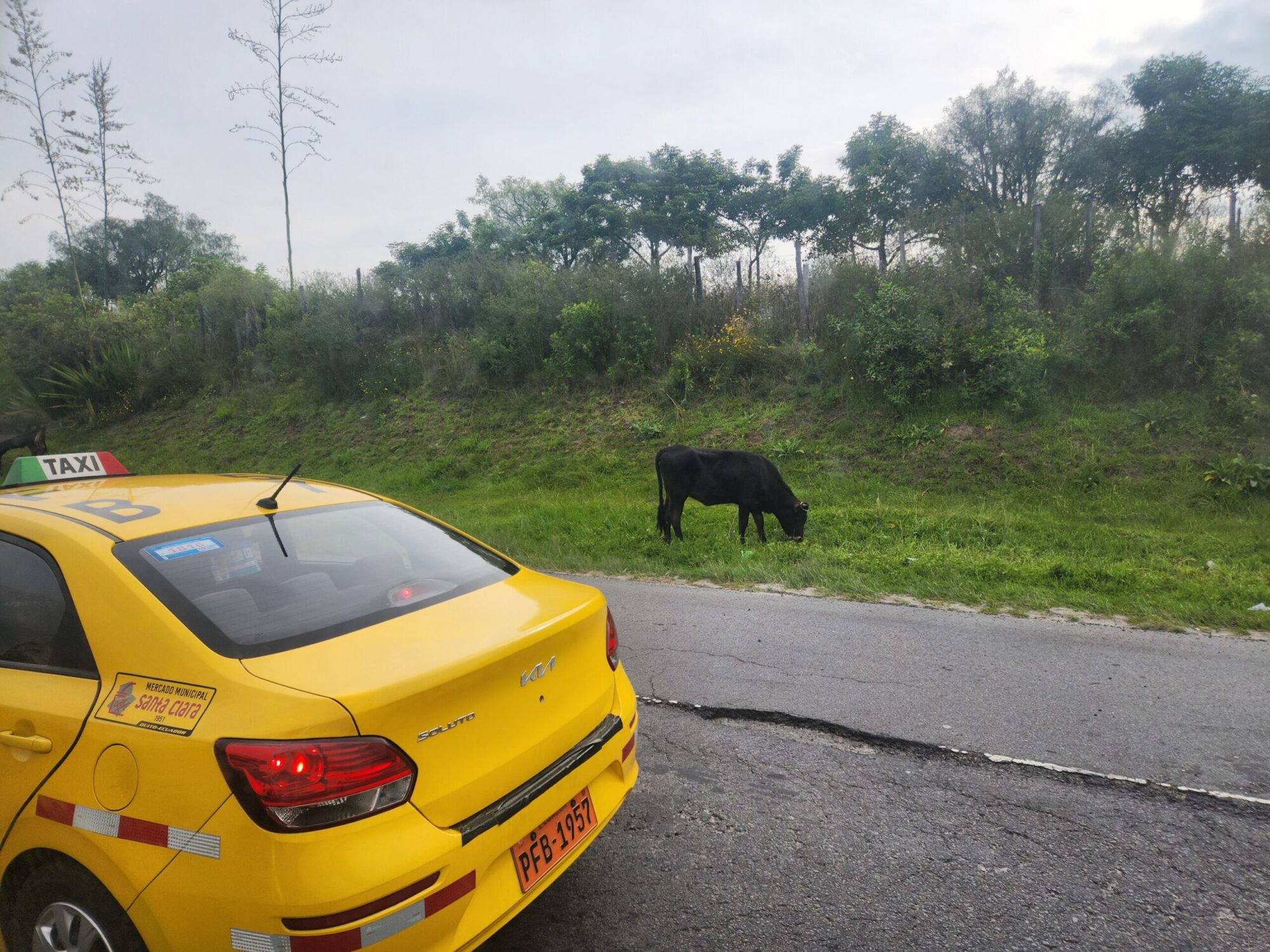
We departed Puembo for the airport, passing through a landscape that felt almost pastoral in its quiet beauty—mountains rising in the distance, and cattle tethered along the roadside, grazing lazily in the shallow ditches. The stillness of the countryside stood in gentle contrast to the sudden bursts of motion around us, as taxis and shuttle vans wove through the roads with an urgency that might well have qualified them for a Grand Prix.
Farewell, Quito—for now. We left with the quiet certainty that this was not a goodbye, but merely a pause before our return.
“We leave something of ourselves behind when we leave a place, we stay there, even though we go away. And there are things in us that we can find again only by going back there.”
— Pascal Mercier